

Trust and credibility carry as much weight as price in industrial B2B purchasing decisions. Yet many leaders still dismiss branding as marketing “fluff.” That’s a costly misconception.
Branding is a measurable business capability that directly influences how buyers perceive you long before they talk to sales. Managed well, it builds trust, reduces perceived risk, and fuels long-term growth.
The competition knows it: 62.7 percent of B2B marketers say brand is critical to success, and 40 percent are increasing budgets to build stronger, more consistent brands. If you’re not keeping pace, you may be losing deals before you even know you’re in the running.
In this post, we’ll explain what branding really means in industrial B2B, why it’s more important than ever, and how to build a strategy that strengthens your market position for years to come.
What is Branding in an Industrial B2B Context?
Industrial B2B branding is the sum of how your company is perceived across every touchpoint, not just the logo on your website.
Many leaders mistake a logo for a brand. A logo is a symbol, a quick visual cue that says, “This is us.” Your brand is the system behind it: the visuals, words, and experiences that shape how customers perceive and trust you.
Core elements include:
- Brand Identity: Your visual toolkit (logo, colors, typography, imagery) applied consistently for instant recognition.
- Brand Voice and Tone: The personality you project through writing and speech, shaping how buyers feel when they interact with you.
- Messaging and Positioning: Clear, aligned answers about who you serve, what you solve, and why you’re different.
- Customer Experience: The overall perception and emotional response buyers get from interacting with your company.
- Internal Alignment: Employees who understand the brand and convey it consistently through actions, communication, and decisions.

Why Branding Matters More in Industrial B2B Markets
Purchasing in technical industries carries significant risk, often involving million-dollar equipment, advanced systems, or long-term service contracts. Buyers place a premium on getting it right, because the cost of a wrong decision is steep:
- Downtime, safety incidents, or regulatory issues
- High financial and operational costs of switching vendors
Our research shows that up to 60 percent of the industrial purchasing process happens before a buyer ever contacts sales. By that point, they’ve often formed an opinion based on your brand’s presence (or absence) across digital and offline touchpoints.
When the stakes are this high, that first impression can determine whether you’re even considered.
High Stakes Demand Proof, Not Promises
Industrial decision-makers live in a data-driven world. They’ve heard the same claim from different vendors thousands of times: “We have the highest quality and best service in the industry.” When every company says it, it stops meaning anything.
Without hard proof, those words carry no weight. A strong brand delivers that proof by
- Providing consistent, accurate messaging across every channel
- Showcasing real-world performance data, case studies, and technical thought leadership
- Demonstrating the same precision in communications that you bring to your products and services
The Market Has Shifted. Your First Impression Is Now Digital.
Conversations used to begin at a trade show or with a cold call. Today, they start with online research. More than three-quarters of buyers turn to the internet, particularly LinkedIn, for self-guided research when making purchasing decisions.
That means your website, social media presence, technical documentation, and online reviews are shaping opinions without you in the room. A strong, consistent brand moves you from “possible vendor” to “low-risk choice.”
If your brand is inconsistent or underdeveloped, you
- Risk being disqualified early in the process
- Appear less capable than competitors with a polished, cohesive presence
- Lose pricing power as buyers default to comparing only on cost
Shaping the Associations That Win Business
When branding is intentional, every touchpoint conveys the impression that you want buyers to take away. Strategic messaging, consistent design, and proof-driven content create strong associations (like reliability, innovation, and precision) long before the first conversation.
Even visual elements alone can influence trust. In fact, consistent use of a signature color can increase brand recognition by up to 80 percent (University of Loyola, Maryland). In industrial B2B markets, this recognition is a trust signal that tilts decisions in your favor.
Example: Two Bids, One Winner
A brand that projects consistency and credibility earns buyer confidence. When everything else is equal, the vendor that feels like the safer bet often wins.
- Company A: Consistent visual identity, well-written case studies, clear technical positioning. Every touchpoint uses the same signature color palette and feels like it comes from the same, reliable team.
- Company B: Outdated logo, mismatched proposal formatting, inconsistent color use across documents, and conflicting claims between the website and sales materials.
Both companies have equal capabilities, but Company A earns more trust, faces fewer price objections, and often wins the work. Why? Strong, consistent branding reduces perceived risk.
The Components of a Strong B2B Brand
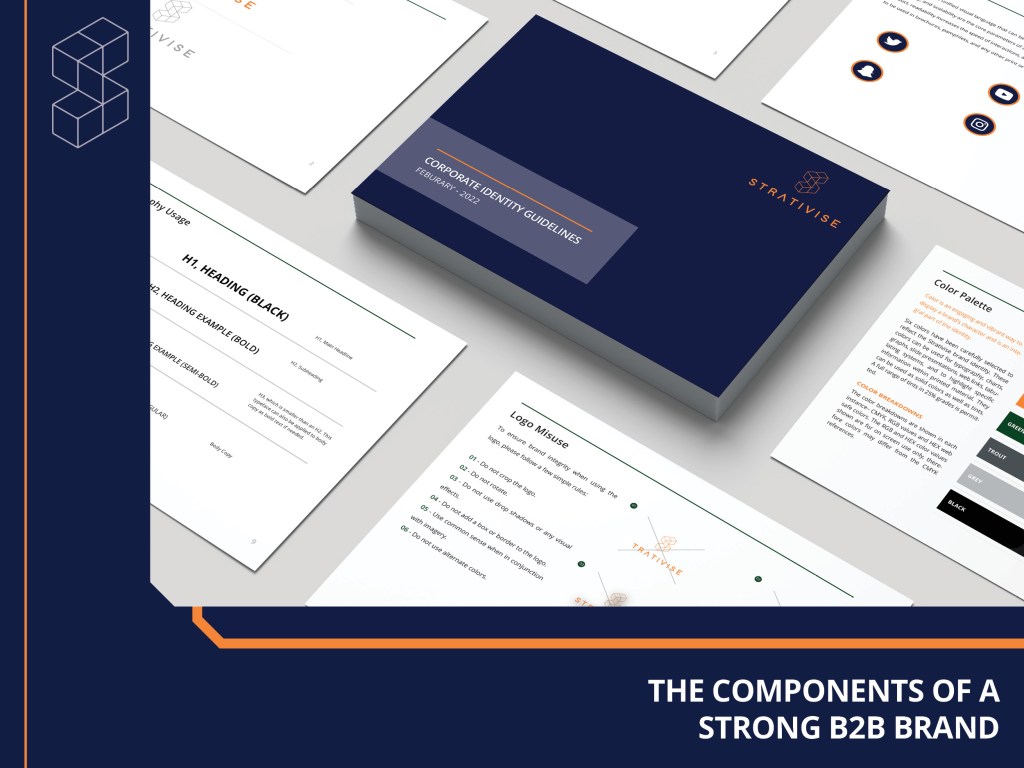
A strong brand is a system of visual, verbal, and experiential cues that tell buyers who you are, what you stand for, and why you’re the safest choice.
- Your Logo: a Signal, Not a Story
In industrial markets, your logo should be:
- Clean and versatile, making it suitable for everything from a hard hat to a trade show banner
- Legible at small sizes for technical drawings or product labels
- Usable in black and white for manufacturing documents or bids
Think of it as the flag that represents your brand. The meaning comes from the messaging, experience, and reputation behind it.

2. Visual Identity: The Emotional Layer of Technical Selling
In high-stakes industrial sales, buyers notice when every touchpoint looks as if it comes from the same company. That consistency makes you recognizable and reinforces trust.
Core components include:
- Color Palette: Consistent colors convey certain qualities (e.g., deep blues for reliability, bold accents for innovation) and become instant triggers for recognition.
- Typography: Uniform typefaces across materials show attention to detail and operational precision.
- Layouts and Design Elements: Repeatable structures in proposals, brochures, and technical documents create order and familiarity.
- Imagery Style: A consistent approach to lighting, angles, and editing makes all elements feel like part of the same brand.
Bottom line: A distinctive, unified visual identity becomes shorthand for your reputation. Inconsistent visuals suggest inconsistency elsewhere.
3. Messaging Framework: The Core of Your Story
Buyers want to know, quickly, who you are, what you solve, and why you’re the best choice. A clear messaging framework ensures they always get the same answer.
Core components include:
- Who You Serve: Specify target industries, buyer roles, and pain points so prospects know they’re in the right place.
- What You Solve: Articulate the challenges you address in buyer language, not just technical specs.
- Why You’re Different: Highlight your competitive advantages, backed by case studies, data, or unique processes.
- Key Messages: Use short, repeatable statements that sales, marketing, and leadership can use to stay aligned.
Clarity builds confidence, accelerates trust, and keeps your brand credible, no matter who delivers the message.
4. Brand Voice: How You Sound Everywhere You Show Up
Your brand voice is the personality your company communicates in writing and speech. In industrial B2B, consistency here is as critical as consistency in visuals.
A strong industrial brand voice is:
- Professional and knowledgeable: Showing expertise without jargon overload
- Approachable and solution-oriented: Clear explanations for complex topics
- Aligned across touchpoints: Consistent tone and language from RFPs to social media
When your voice is consistent, buyers know what to expect, making each interaction feel like part of the same, reliable relationship.
Brand Alignment Across the Customer Journey
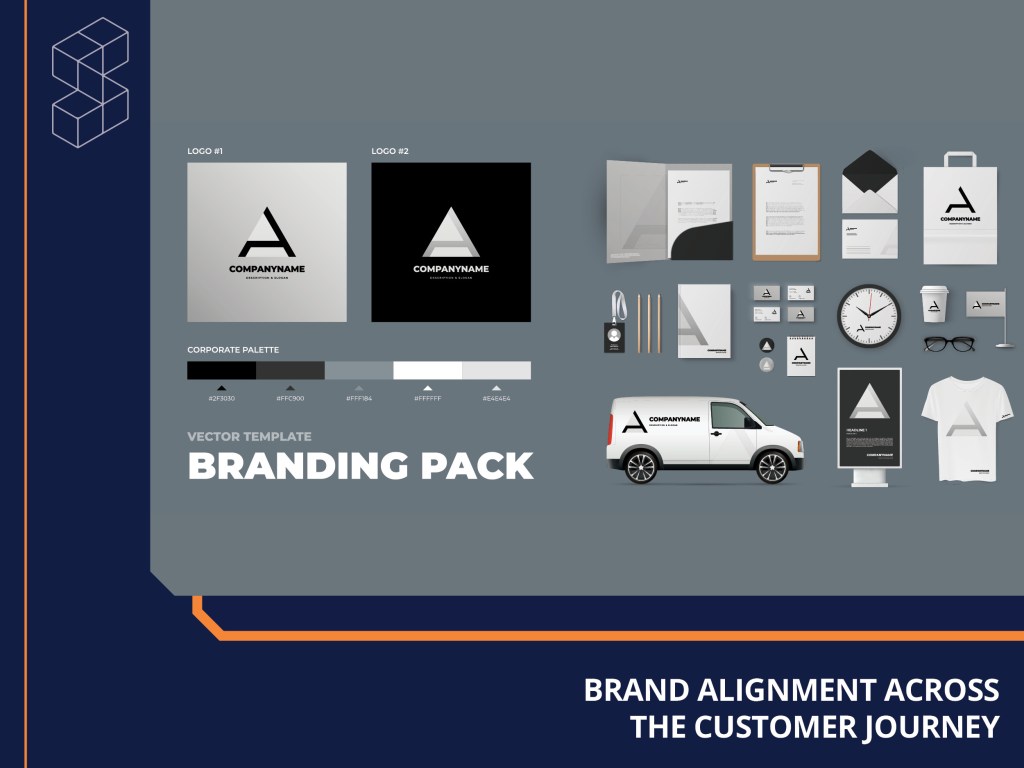
Brand alignment means that every interaction, whether digital, in-person, or on paper, feels like it’s coming from the same company. It’s the glue that connects your identity, voice, and messaging into one coherent experience.
Why Brand Alignment Matters in Industrial B2B
Industrial buyers form an impression of your business through one interaction at a time, such as scrolling LinkedIn, reviewing a whitepaper, viewing a Google advertisement, or hearing a sales presentation.
When those touchpoints feel disconnected, buyers are left guessing who you are and whether you can deliver. That extra mental work introduces friction, erodes trust, and slows purchasing decisions.
In high-stakes B2B purchases, brand alignment signals reliability. It shows that the same precision you apply to engineering and manufacturing is applied to every interaction with your customer.
Where Alignment Makes or Breaks Deals
- Website: Often the first (and most repeated) touchpoint. It should establish the visuals, tone, and key messages buyers will encounter everywhere else so that when they engage with sales, nothing feels like a surprise.
- Social Media (Especially LinkedIn): Builds familiarity before direct contact. Should feel like an extension of your website and brand voice, not a separate personality.
- Sales Presentations: Must reinforce the positioning and proof points buyers have already seen online, using the same terminology and visuals as your proposals and datasheets.
- Proposals and RFPs: Matching your visual system and voice signals professionalism and attention to detail. Even technical formatting and terminology should be consistent with your published specs.
- Customer Service: Every answer, manual, and service ticket should reflect the promises made by sales and marketing.
The Cost of Misalignment
Inconsistent visuals, conflicting claims, or mismatched technical language create friction. Buyers may question whether you can maintain the same standard across your products and delivery.
Alignment, on the other hand, removes that friction. At every touchpoint, it confirms that the buyer’s first impression was correct: you are a credible, capable, and low-risk option.
Strong Industrial B2B Branding Is a Growth Engine
Once your brand is clearly defined, consistently applied, and aligned across the customer journey, it becomes an asset that compounds value year after year.
- Sales Enablement: A clear, credible brand shortens the sales cycle. Buyers arrive pre-sold on your expertise, so every conversation starts further down the path to a deal.
- Talent Attraction and Retention: Top engineers, technicians, and salespeople want to work for companies that project confidence and professionalism. A strong brand makes you the employer of choice in competitive labor markets.
- Pricing Power: When buyers trust your brand, they’re less likely to make price the deciding factor. Consistent branding communicates value, quality, and reliability—giving you leverage in negotiations.
- Customer Loyalty: A trusted brand keeps customers coming back. Consistency and clarity deepen relationships, making you harder to replace.
The takeaway: Consistent branding gives your value proposition credibility at scale, making your sales, recruitment, and retention efforts more effective and more profitable.

In Industrial B2B, Brand Development Is an Asset
In industrial B2B, your brand is far more than marketing “fluff.” Managed well, it’s one of your most valuable assets, driving trust, setting you apart from competitors, and delivering measurable growth year after year.
That’s why branding can’t be a one-off initiative or an occasional visual refresh. It must be an ongoing strategic capability. The companies that lead their markets
- Define their brand with clarity and purpose
- Document it so every team member can apply it consistently
- Reinforce it relentlessly, in every interaction, at every touchpoint
If you’re not doing the same, you’re giving your competitors the upper hand.
Ready to Put Your Brand to Work?
Download The Blueprint for Industrial Marketing to see how leading B2B companies build brands that win more deals, retain more customers, and command higher margins.